
Your mindset is what's holding you back
The ones raising 1.5 billion aren't batting an eye at a $1000 room rental. They're making it work.
July 6, 2026
The Longevity Social Club — July 27, 2026
This week I flew to Austin and watched my small-town brain try to talk me out of my own life, severe morning sickness turned out to be written in women’s DNA, and a woman is quietly running a $17.5B AI company. Plus where to be this fall and a Claude move you can steal today. Let’s go. 🫶
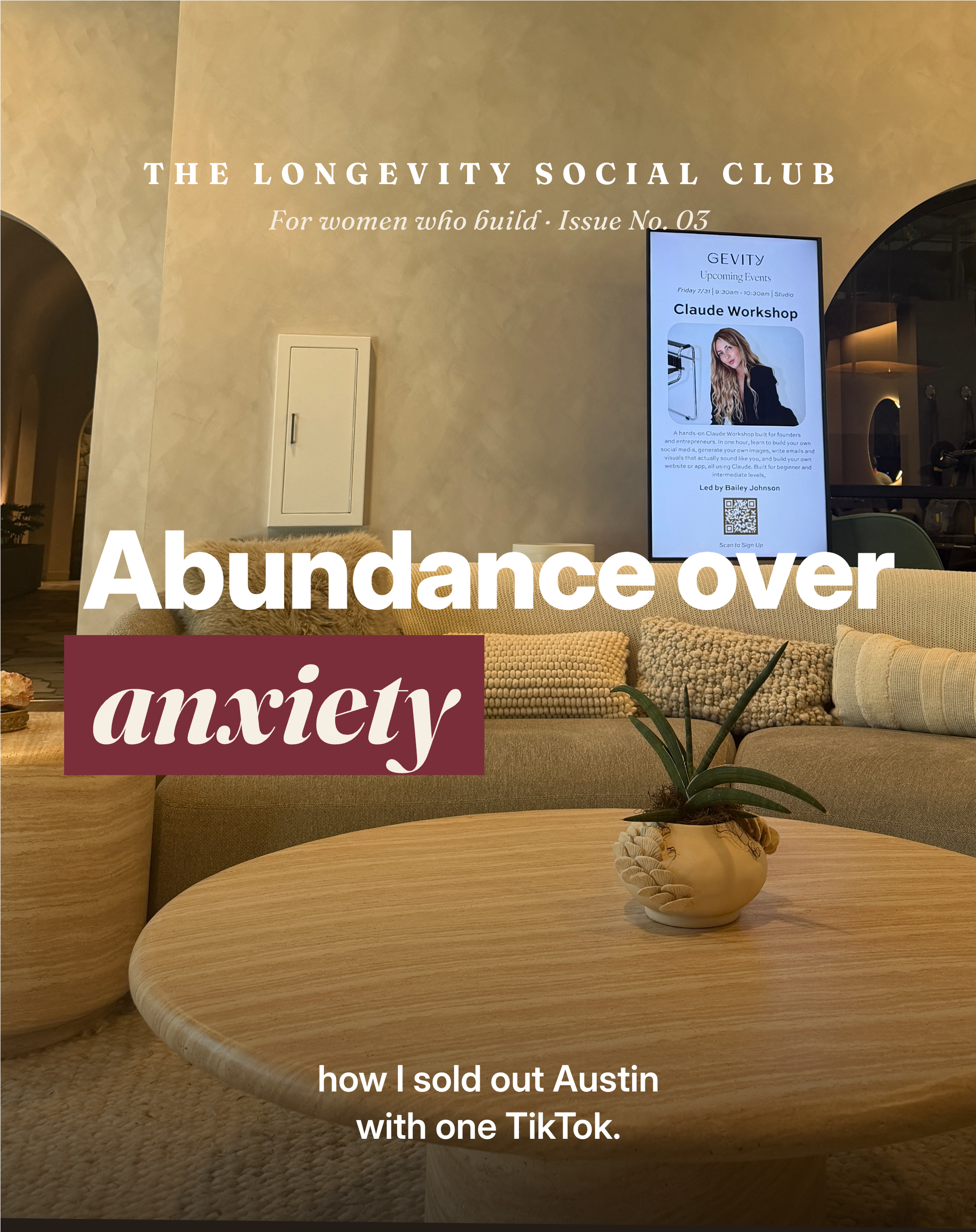
I flew into Austin this month and watched my eighteen-year-old self climb right back into the driver’s seat. New city, I know exactly two people here, and one of them flew in with me. I had this idea to host an event, and for about 0.2 seconds the small-town girl in my head asked who do you think you are. Then I remembered: I moved from Kentucky to Miami speaking zero Spanish, knowing zero people, and I built a whole life out of that. I can absolutely throw an event in Austin, Texas.
So I looked at the venue I actually wanted, and it was expensive, and the scared version of me started listing every reason I couldn’t sell it. Too pricey, too risky, who’s going to come. And then I told myself to drop the bullshit. The space is worth it, money comes and goes, and the more I bet on the work the more the work pays me back. Abundance over anxiety, every single time.
One TikTok. 5,000 views. The event sold out.
It’s the week of the event now, I have a waitlist of 15 female founders I genuinely cannot wait to be in a room with, and I’m already hunting a venue in San Francisco, which is possibly the scariest place on earth to throw an AI event as a non-technical founder. And we’re doing it anyway.
The hot take: the venue you’re scared to book is usually the one worth booking. Scarcity thinking is the most expensive habit a founder has, and the women raising $1.5B this week are not the ones playing small.
What I’m watching: five frontier AI models dropped in two weeks while most founders still haven’t opened Claude once. That gap is the whole opportunity, and it’s exactly what we’re building in Austin.
The Longevity Social Club. Built for women who build.

Claude Opus 5 (Anthropic, July 24). Anthropic’s new top model tops the coding and knowledge-work charts at roughly half the price of the last flagship. If you’ve been meaning to actually lean on Claude, this is your sign.
How you’d actually use it: hand it your messy discovery-call notes and get back a polished proposal plus a welcome email that sounds like you, not a robot
Canva Code 2.0 (Canva, July 14). Describe a website, app, or embed in plain words and it builds an editable one for you, now free on every plan.
How you’d actually use it: build the landing page you’ve been avoiding in a single afternoon, live link by dinner
FLUX 3 (Black Forest Labs, July 23). One tool that makes images and 20-second videos with sound from a single prompt.
How you’d actually use it: spin a month of matching video and graphics from one prompt plus your brand vibe, then schedule them and walk away.

Fireworks AI — Lin Qiao — $1.5B Series D at a $17.5B valuation. Lin ran PyTorch at Meta and now runs one of the biggest AI-infrastructure companies in the world, moving more than 40 trillion tokens a day. Very few women operate at this altitude, and she’s about to triple the team. (July 16)
Fora — Henley Vazquez — $60M Series D at a $1B valuation. An AI-equipped platform that turns people who never worked in travel into independent travel advisors, now officially a unicorn. (July 16)
Passionfroot — Jen Phan — $15M Series A. An AI-native platform (with an agent named Zest) that connects software companies with vetted creators. She grew revenue 13x and hit profitability first. (Insight Partners, July 22)
Estrigenix Therapeutics — Victoria Zellmer & Karyn Frick — $2M seed. Biotech building safer, selective estrogen therapy for menopause and women’s health. Small check, big mission. (Talents Fund, July 22)
Here’s the thing: women founders still get only about 2% of all venture money, so every single one of these is worth cheering for.

Health & Wellness 2026 Halftime Report (Global Wellness Summit, July 15). A mid-year check on where wellness is heading, and the headline is a real vibe shift: from buying to belonging. People want community over another purchase, which, if you’re building anything in this space, is basically the whole thesis.
The Future of Wellness 2026 Trends (Global Wellness Summit). Their flagship forecast, and two of the named trends are literally our beat: women getting their own lane in longevity, and the over-optimization backlash. Bookmark it.
FDA’s review of peptides: separating science from hype (Dr. Omer Awan, Forbes, July 21). A doctor’s calm, balanced take on the peptide frenzy and the gap between the hype and the human data. The perfect companion to the story a little further down.

The “protective” gene. Researchers found that the longevity-linked APOE2 gene seems to guard brain cells by cutting DNA damage and helping neurons recover from stress, a promising lead for anyone carrying high genetic Alzheimer’s risk. (July 24)
The SuperAgers. New work on people in their 80s who have the memory of someone decades younger found their genes look pretty ordinary, which means something else is protecting them, and we don’t fully understand it yet. Fascinating, and a little humbling. (July 25)
Morning sickness is in the DNA, not in her head. The largest genetic study ever done on severe pregnancy sickness (hyperemesis gravidarum) mapped 10 risk genes and confirmed the GDF15 “nausea hormone” as the real biological cause, comparing about 11,000 women who lived it against 461,000 who didn’t. For a condition doctors spent decades brushing off as psychological, the DNA just ended the argument, and it hands drugmakers a real target to go after. ScienceDaily (July 15). Strong evidence, a large human genome-wide study.
The FDA just weighed in on peptides
If you spend any time in the longevity corner of the internet, you’ve heard about peptides, BPC-157 especially. Here’s what actually happened. On July 23 and 24, an FDA advisory committee (the Pharmacy Compounding Advisory Committee) reviewed seven popular peptides and voted to recommend six of them, BPC-157, TB-500, KPV, MOTS-c, Epitalon, and Semax, for the list of substances that compounding pharmacies are allowed to prepare. They rejected only one, DSIP. The panel actually overruled the FDA’s own scientists, who had recommended against all seven for a lack of human data. (RAPS coverage here.)
The part almost everyone online is getting wrong: this is a recommendation, not an approval. Nothing changed legally, none of these peptides is cleared to compound today, and the FDA still has months of rulemaking ahead, likely into 2027. So when you see someone posting “the FDA just approved BPC-157,” they didn’t.

Where to find your people, and probably your next big idea, for the rest of the year. Date-ordered, and I starred the ones I’d move things around for.
Aug 4–6 · Ai4 · Las Vegas · AI
Sep 10 · Forbes Power Women’s Summit · New York · Business
Sep 11–13 · Health Optimisation Summit · London · Wellness
⭐ Sep 12–13 · AI-Powered Women Conference · MIT, Cambridge · Women + AI
Sep 19–20 · Create & Cultivate Festival · Los Angeles · Business
Sep 23 · Tech Up For Women · New York · Women
Sep 29–Oct 1 · The AI Conference · San Francisco · AI
⭐ Oct 5 · Texas Conference for Women · Austin · Business
Oct 7–8 · World Summit AI · Amsterdam · AI
Oct 12–14 · Fortune Most Powerful Women Summit · Santa Barbara · Business (invite-only)
⭐ Oct 27–30 · Grace Hopper Celebration · Anaheim · Women in Tech
⭐ Nov 5–8 · Eudēmonia Summit · West Palm Beach · Wellness + Longevity
Nov 10–13 · Global Wellness Summit · Phuket · Wellness
Dec 5–12 · Pura Vida Women’s Wellness Retreat · Costa Rica · Retreat
⭐ Mar 4–7, 2027 · LeadHer Summit · Austin (Miraval) · Retreat
Join us
The Longevity Social Club is a community for women who build. If you want in, apply for free to join the whats app at thelongevitysocialclub.com and we’ll get you in the room. 🫶
Thanks for reading! Subscribe for free to receive new posts and support my work.
Longevity Social Club
Join the private community.
Founder circles, intelligence sessions and private tables — by application.
Continue Reading
More from the Journal
September 22, 2026 · 12 min read
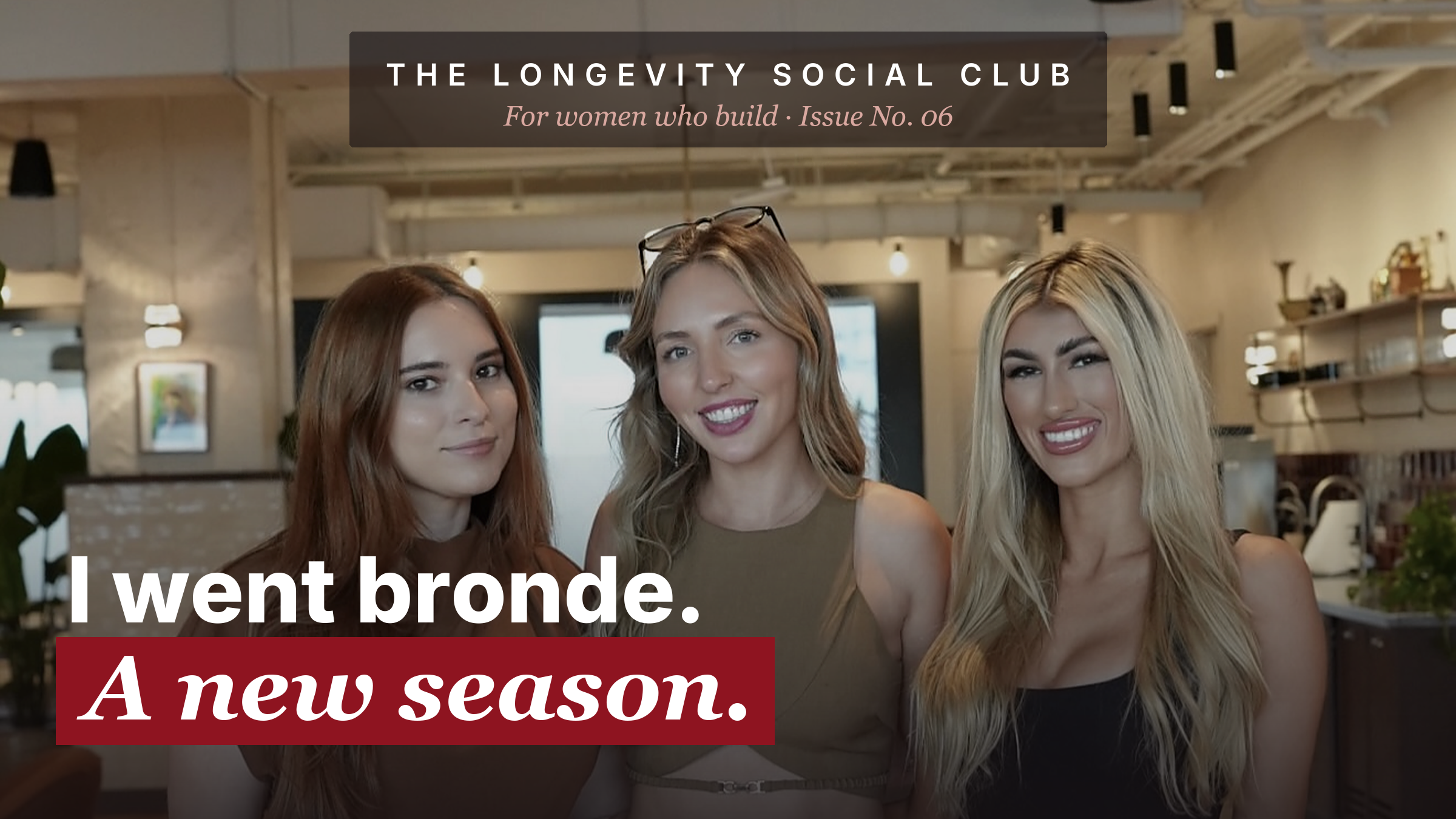
I Went BRONDE, A Woman Raised $450 MILLION For Rockets, And A Supplement Brand Became A Doctor's Office...Let Me Explain
the hair color that started a whole new season, the $119 lab panel hiding inside your iphone, and the study everyone reposted four months late
August 24, 2026 · 17 min read
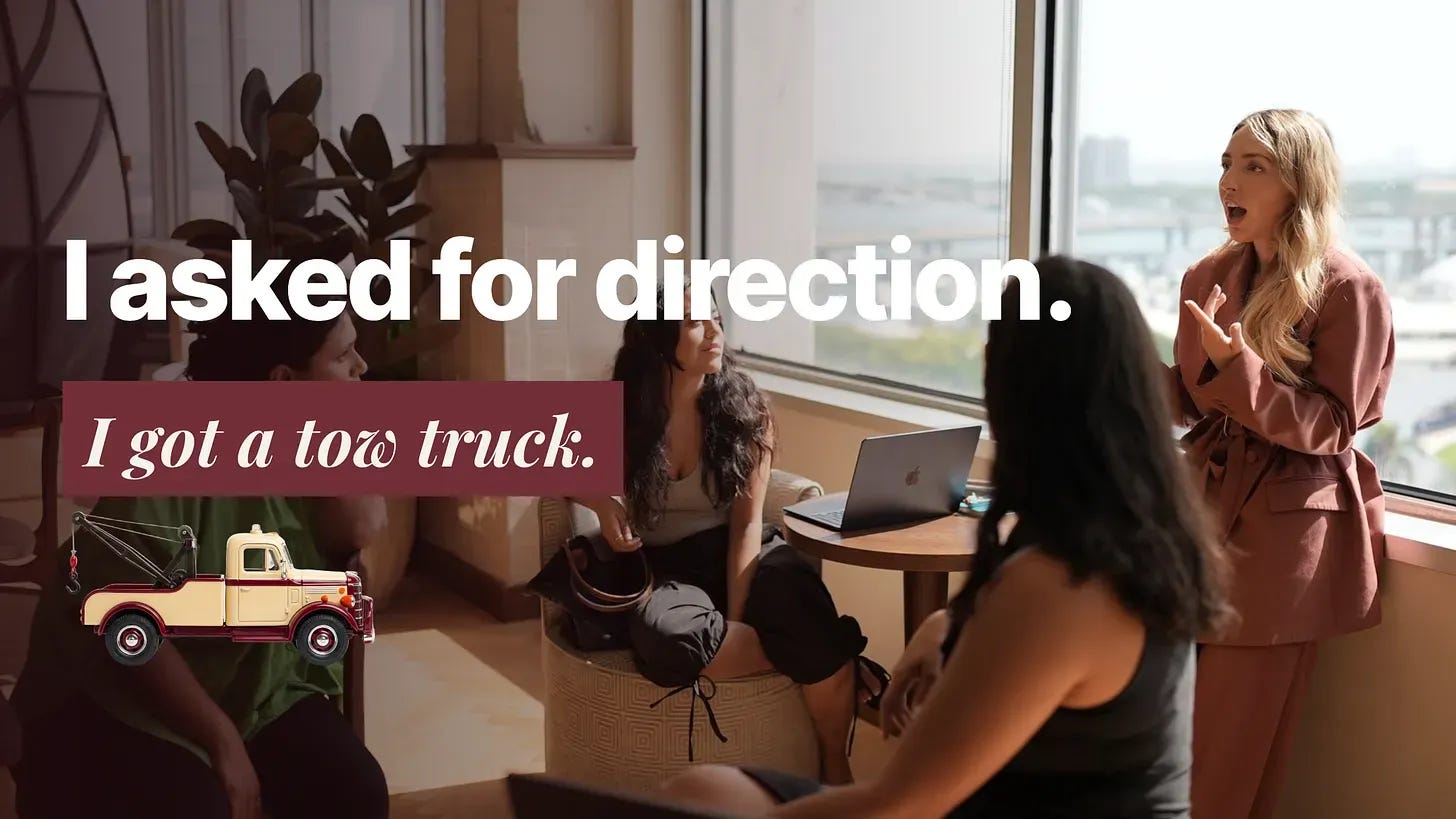
My Car Got TOWED, A Cookie Went To JAIL, And Women Raised $531M...I Have So Much To Tell You
the tow truck that fixed my week, the $3.8 billion supplement deal, and a $16 smoothie that comes with its own bloodwork
July 6, 2026 · 5 min read
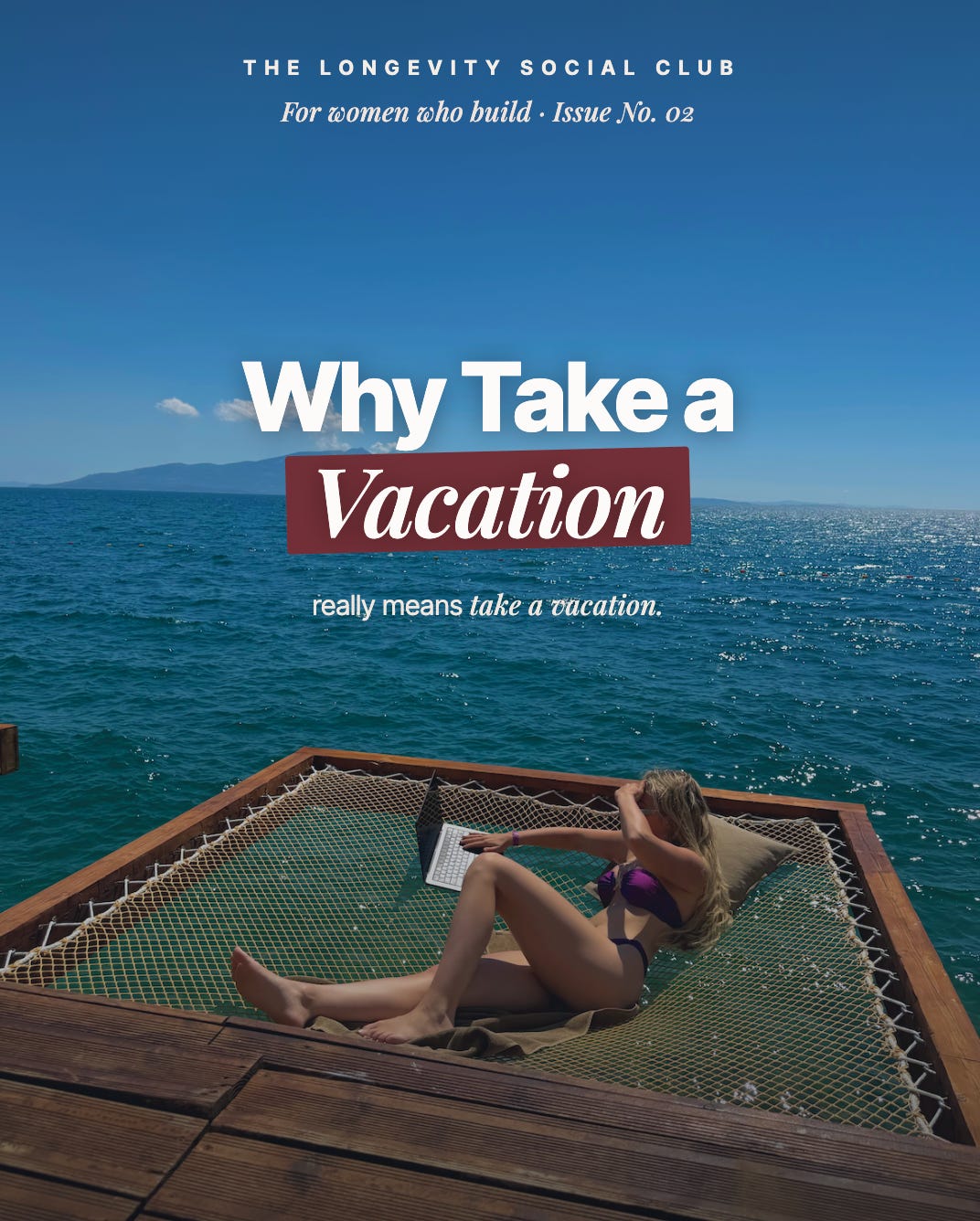
Babe, take the vacation.
Why "you have to take a vacation" is really "you HAVE to take a vacation"