New here? Welcome. Every week I share a founder story, the latest female-founded funding rounds, small longevity habits backed by research, and one AI move you can use right away. Built for women who build.
In this edition
The open: how getting fired started my business
Field notes from Eudēmonia
The health story: Apple’s new AI health study with OpenEvidence
The founder story: Daniela Amodei and the Anthropic IPO
This week in funding: $547M to four female-founded companies
The brief, founder fuel and two Claude workflows to try
Female founder highlight: AuraMD
This week in the Club, plus a poll
The open
Three years ago I fell for Andrew Huberman as one does
Then I found out he was speaking in West Palm at a brand new conference called Eudēmonia, and something in me went, I have to be in that room. The ticket cost more than I could spend back then, so I did the thing I always do when I want into something I can’t quite afford yet. I figured out how to work it instead.
Here is what you should know about me. I love going to events, and I love running them even more. Backstage is my favorite seat in the house. So I cold DM’d the CEO and the senior event producer of Eudēmonia on LinkedIn, and five minutes later my phone rang. It was Jonnie, the producer, and he said Sean needs an executive assistant tomorrow, can you get up here. I said yes before I had any plan for how.
The one problem was the job I already had. I was remote, three CEOs deep in a single year, and honestly over it, and I had one meeting on the calendar that day whose entire purpose was for me to set up a Zoom. I told my boss I had a once in a lifetime opportunity, that the room was full of billionaires and it could even bring money back to us. She said no, then she said she would call me back later. She never called me back later.
So I went anyway. Two days after that, I got fired.
It is still one of the best things that has ever happened to me, because getting fired is what put me in that room, and that room handed me my first health client, and that client became my whole health marketing agency. That is the entire reason I will always tell you to bet on yourself. You never know where one yes is going to take you. 🫶
If this story landed, subscribe for free. A new edition lands every week.
Field notes from Eudēmonia
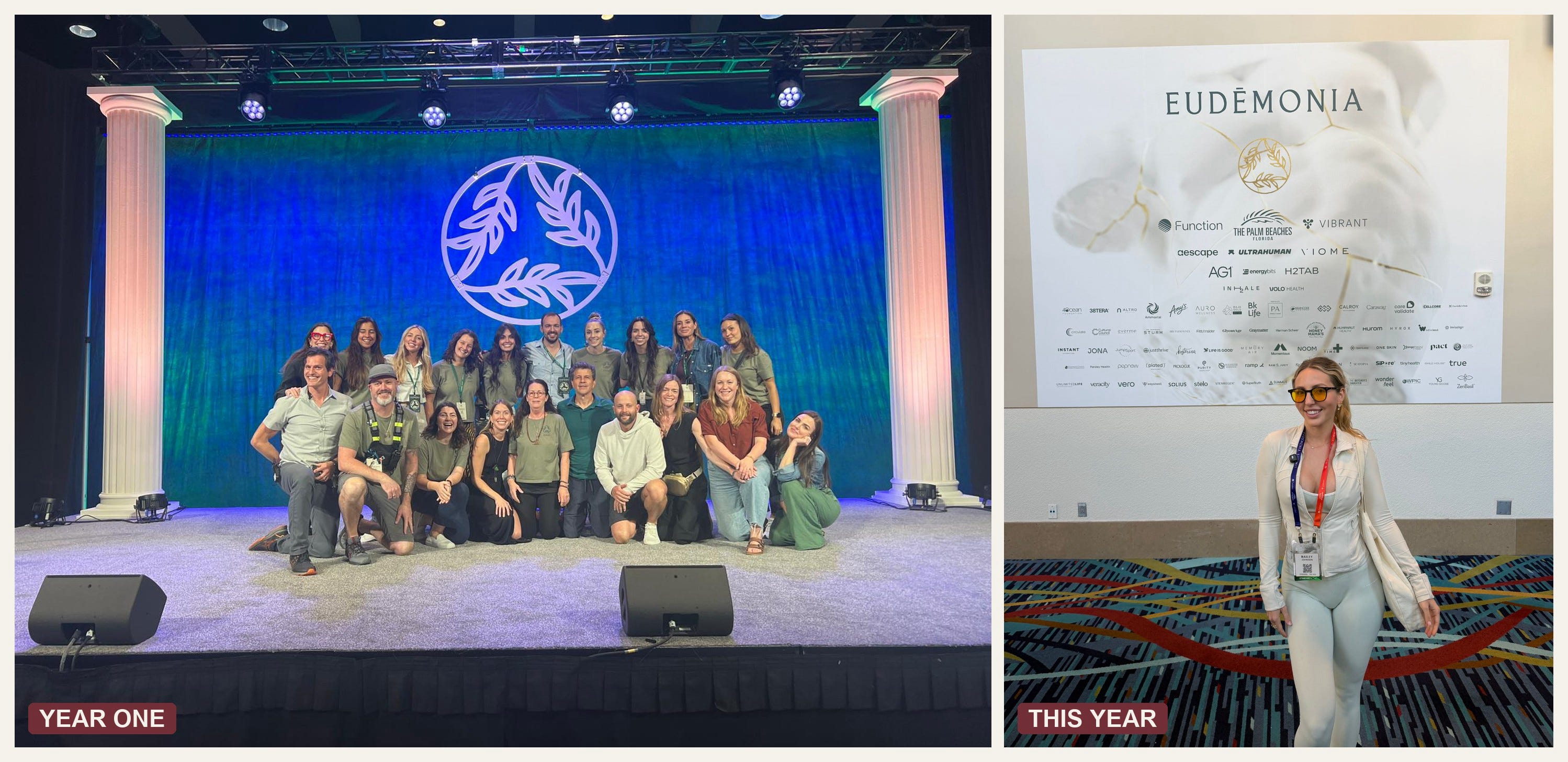
This was my third year back, and the growth is wild. Year one the expo was a few rows. This year it filled the floor ten times over, wall to wall with health companies, no room left for one more booth. That alone tells you how fast this is moving, there are finally enough companies to fill a space that big.
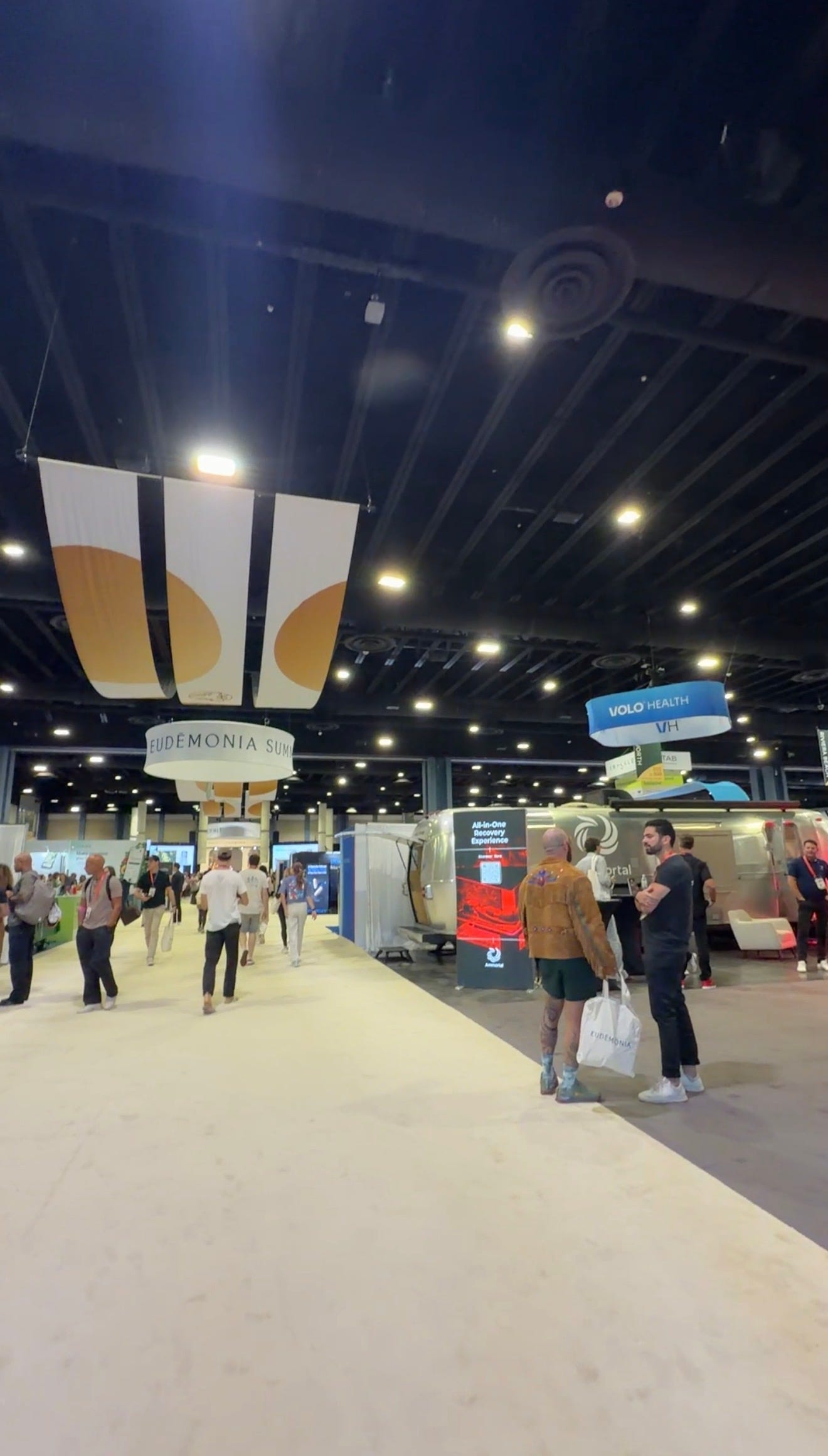
What got me most is who was in the room. This is not a consumer show, it is physicians and consumers side by side. Doctors earned CME credits in one room, then walked into the next to see what people want from their health right now.
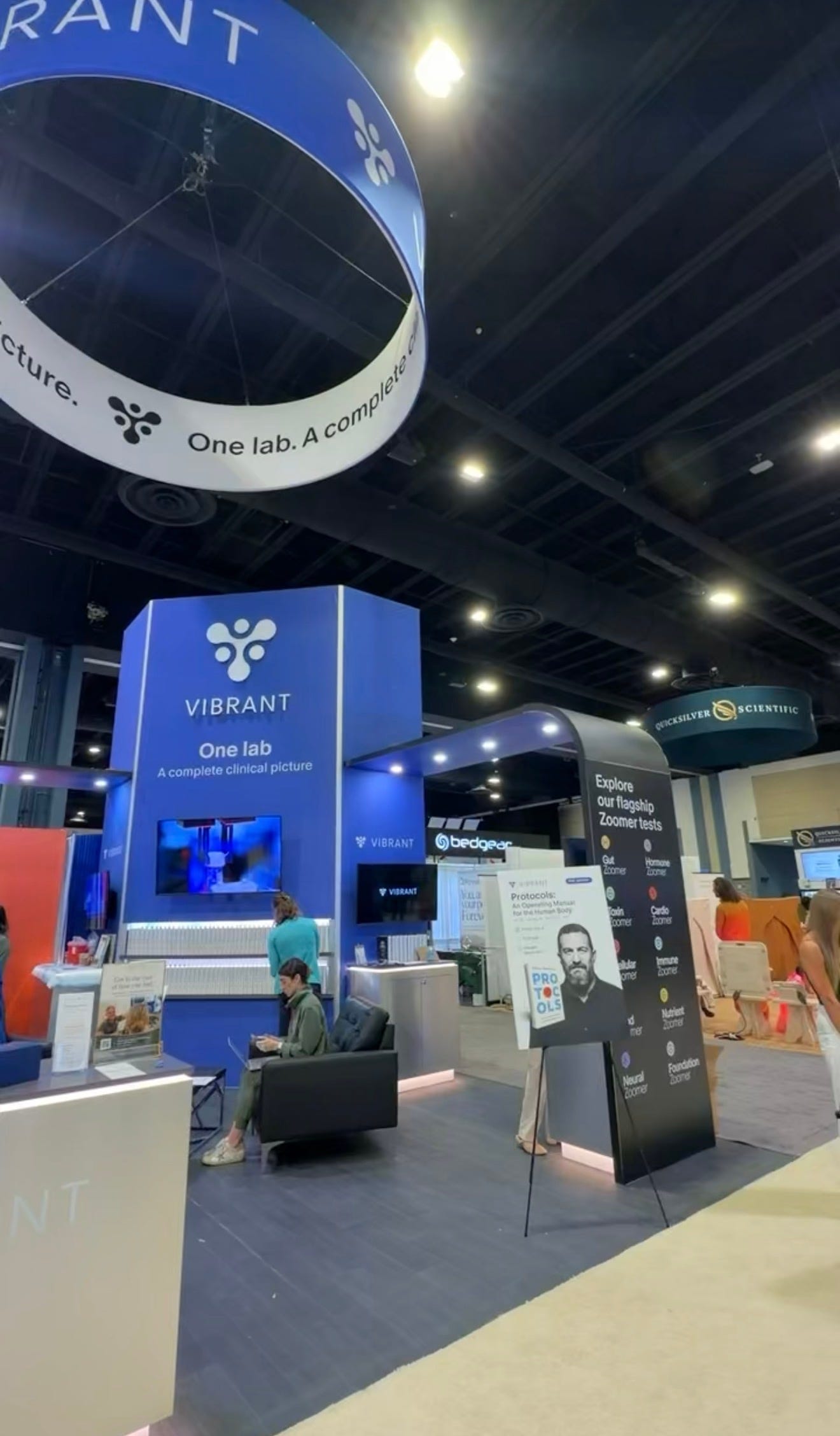
And the testing. Most biohacking conferences hand you a hyperbaric chamber and some infrared light and call it a day. This one was a one stop shop for your whole body: QEEG brain scans, Emsculpt, IV drips, B12 shots, massages from Escape, blood testing on site, and Ezra running MRIs right there on the floor.
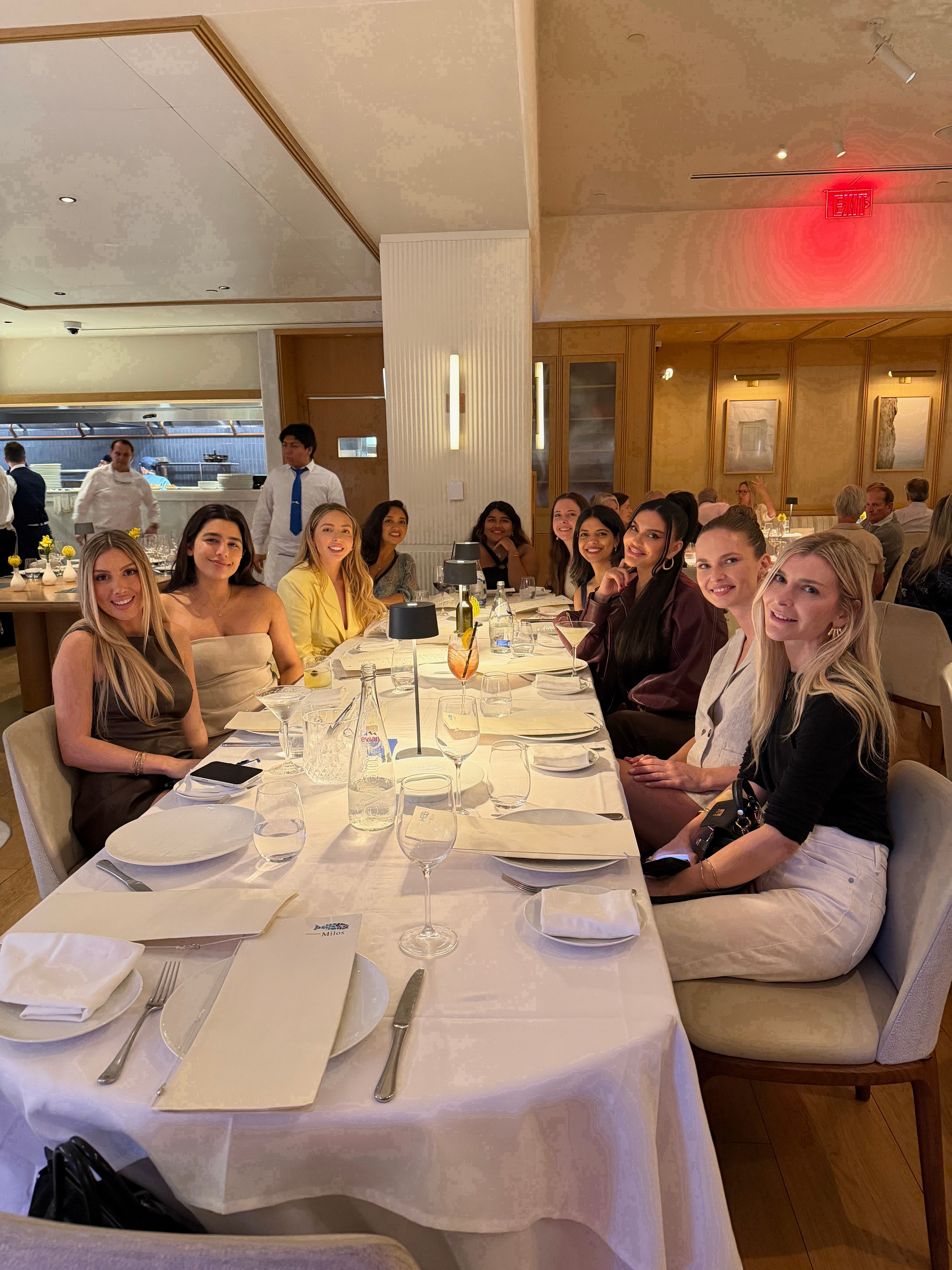
Where I think this goes next year: the whole city of West Palm gets taken over, activations spilling out of the convention center into every hotel, restaurant and rooftop, the way Austin belongs to South by Southwest for a week. Eudēmonia stops being a conference you attend and becomes a city you show up to.
Hit reply and tell me about a time you bet on yourself before you felt ready. I want to hear it.
The health story: Apple and OpenEvidence
On November 15, Apple launched the Apple Health AI Study App, built with OpenEvidence, a clinical AI platform made for healthcare professionals. You ask everyday health questions, and the answers are grounded in sources like The New England Journal of Medicine, JAMA and Nature (TechCrunch).
Who can join. US iPhone users over 21 with an iPhone 15 or later, iOS 26 and Apple Intelligence turned on. Apple is looking for up to 200,000 people, and the study runs for more than 12 months.
What you do. Ask questions, rate the answers and fill out a monthly survey. If you choose, you can share HealthKit data like sleep, resting heart rate, activity or lab results for more personal answers. It can also help you prepare for a doctor visit.
Privacy. Apple says your data is anonymized and won’t be used to train AI models, and OpenEvidence deletes questions and answers after 24 hours.
Why it matters. Instead of rushing out a chatbot, Apple is studying whether people trust health AI, understand its answers and act on them. It lands after ChatGPT Health, Copilot Health and Perplexity Health all launched this year (The Next Web). Your phone is becoming the first place you take a health question, and Apple wants to get the answer right.
Hit reply and tell me: would you trust an AI with your health questions?
The founder story: Daniela Amodei ran toward it
Anthropic prices its IPO on Wednesday, November 18, and starts trading Thursday, November 19, under the ticker ANT. The range is $70 to $78 a share, which values the company at about $1.3 to $1.45 trillion (Yahoo Finance). Daniela Amodei, co-founder, president and one of seven founders, will sell 3,378,378 shares in the offering. At the $74 midpoint that is 3,378,378 x $74, or a touch under $250M (TechCrunch).
Here is the part I love. She finished college in 2009, a hard year to graduate into, and started out in international development, then worked on Capitol Hill and a campaign. She then joined Stripe when the company had about 40 people, and she stayed almost six years. In 2018 she joined OpenAI while it was still a small research lab (Stanford GSB).
The bet. In December 2020 she left OpenAI with her brother Dario and a group of colleagues to start Anthropic. She describes the decision this way: “We were running towards something versus running away from something” (Stanford GSB). They chose to incorporate as a public benefit corporation, which legally requires the company to balance shareholder interests with its mission.
The money. According to Fortune’s read of the IPO filing, she holds about 241.4 million shares, worth roughly $14.2B at the company’s last private share price of $58.90 (241.4M x $58.90). Fortune reports she made $16.4M in 2025, and she has pledged 80% of her Anthropic equity to philanthropy (Fortune). The final IPO valuation has yet to be set.
The move to steal. Be the generalist who goes early. “I really think of myself as a generalist,” she told Stanford, and her path proves how far that travels. She joined two companies while they were small enough for one curious person to touch everything, learned how great organizations get built, then took all of it into her own. If you are waiting for the perfect credential before you make your move, her story says go get close to the work first, and let range be your edge.
My favorite detail is the direction of the bet. She chose the thing she believed in more. Running toward something is a far better compass than running away.
This week in funding
Four female-founded rounds from the last 14 days, largest first, with who wrote the checks and why each one matters. Together they total $547M ($375M + $100M + $47M + $25M).
1. Northwood Space, $375M Series C at a reported $2B valuation (November 3). Co-founder and CEO Bridgit Mendler is building the ground stations and antennas that connect satellites to Earth. Co-led by Andreessen Horowitz and DFJ Growth, with Washington Harbour Partners, Alpine Space Ventures, StepStone and In-Q-Tel, plus a credit facility from HSBC Innovation Banking (Tech Funding News). Why it matters: she left an acting and music career to study at MIT’s Media Lab and Harvard Law, and that career change now runs a space company investors value in the billions.
2. Databento, $100M Series C at a $1.1B valuation (November 13). Co-founder and CEO Christina Qi runs a market data company that gives trading firms, brokerages and asset managers live and historical data for futures, options, stocks and indices through one API. Led by Fifth Down Capital, with NEA, DRW Venture Capital, Tribe Capital and Hedosophia, plus Fitch Ventures as a strategic investor (FinTech Global). Why it matters: it follows a $97M Series B earlier this year, and Databento now works with five of the six largest frontier AI labs, proof that a data business can become core infrastructure for AI.
3. Mosaic, $47M seed (November 11). Co-founders Dr. Ileana Pirozzi (CEO) and Dr. Alison Kight Mackanic (CTO) met during their doctoral studies at Stanford and are building surgical robots that navigate blood vessels. Backers include 8VC, Fundomo, Lingotto Innovation and Obvious Ventures (Tech Funding News). Why it matters: deep expertise can command a very large first check, even straight out of stealth.
4. Nanopath, $25M Series B (November 10). Co-founders and co-CEOs Dr. Alison Burklund and Dr. Amogha Tadimety are building a 15-minute molecular test for vaginitis, so a patient could get results during the same appointment. Co-led by Norwest and SV Health Investors’ MedTech Convergence Fund, with the Labcorp Venture Fund, Elderberry Ventures, GingerBread Capital and Alumni Ventures, and the round includes $2M in grants (PR Newswire). Why it matters: serious medtech investors are backing women’s health diagnostics. The test is still in development and not yet cleared by the FDA.
One takeaway if you are raising now: every founder on this list brought an edge that was specific to her, whether an unexpected first career, deep technical expertise or a PhD. Lead your pitch with the thing only you have.
The brief
Oura is buying an AI doctor. On November 10, Oura agreed to buy Counsel Health, an AI primary care company where you chat about symptoms and can bring in a real physician, for $625M in cash. Oura plans to pair it with ring data and expects to close before the end of 2026 (Healthcare Dive).
ChatGPT now has business profiles. OpenAI launched a Business Hub in beta on November 10, where companies can create a business profile and verify and update the information ChatGPT has about their products and services (TechCrunch).
Claude can read your spending. A new Personal Finance tool, in beta for paid US subscribers since November 5, connects to your accounts through Plaid and flags duplicate charges, fees and rising bills (TechCrunch).
Pfizer named its first female CFO. Cecile Guegan steps in as women made up 20% of global CFO appointments in the first three quarters of 2026, down from 24% a year earlier, according to Russell Reynolds data (Fortune, November 5).
Founder fuel
Three small things to try this week, each tagged by how solid the evidence is.
Hold your bedtime steady. A study of 10,362 adults and more than a million nights of wearable data linked night-to-night swings in sleep timing to a 20% to 23% higher risk of serious heart events (American Heart Association, November 2). Pick one bedtime and one wake time and keep them as consistent as you can, weekends included. Evidence: medium. It is a large observational study and a preliminary conference abstract, so it shows a link, and cause is still unproven.
Slide your bedtime a little earlier. In an eight-week randomized trial of 196 short sleepers with prediabetes, adding sleep coaching and a gradual earlier bedtime improved self-reported sleep quality and daytime sleepiness (NYU via EurekAlert, November 2). Move your bedtime earlier in small steps and keep your bed for sleep. Evidence: medium. It is a randomized trial, modest in size, in a specific group, and the improved measures were self-reported.
Add up your caffeine. The American Heart Association says up to 400 mg a day is generally safe for most adults, up to five 8-ounce cups of black coffee, and some pre-workout supplements contain more than 12 times as much caffeine per fluid ounce as brewed coffee (American Heart Association, November 2). Total one normal day from every source, energy drinks and pre-workout included. Evidence: weak for the heart-risk signal, which comes from voluntary FDA reports. The 400 mg guidance is established.
The Claude move
My whole career started with a cold DM, so this week’s move is the prompt I use to write them. Paste it into Claude, fill in the brackets, and send the one that sounds most like you today.
I want to cold message [name, role, company] because [the room, job or deal I want into].

Here is what I know about them: [paste their LinkedIn about section or a recent post].
Here is what I can offer: [a skill, my time, an audience or a result].

Write 3 versions of a LinkedIn DM, each under 60 words. Each one opens with something specific to them, makes one clear offer of help, and ends with one easy yes or no question. Write the way I talk: warm, direct, zero corporate filler.

Then tell me which version you would send and why.
Lead with what you can do for them. That is how a stranger’s phone call found me in five minutes.
Put AI to work: the follow-up engine
The room is only the start, and the follow-up is where a yes turns into a client. I came home from Eudēmonia with a phone full of names, so here is the system I’m using to turn them into conversations.
Tool: Claude. Setup time: about 20 minutes. What it saves: by my estimate, an evening of staring at blank messages after every event, plus the follow-ups that would otherwise never get sent.
Step 1. Create a home for it. In Claude, start a new Project called “Rooms I’ve been in.” Add a short note about your business, your offer and how you talk, so every draft sounds like you.
Step 2. Brain-dump within 24 hours. Open a chat in that Project and paste this, typed or dictated.
I was at [event] on [date]. Here are my raw notes on everyone I met: [paste names, companies, what we talked about, anything I promised].

Turn this into a table with: name, company, what we discussed, what they need, what I can offer, and a priority of high, medium or low based on fit with my business. Ask me about anything that is unclear before you finish.
Step 3. Draft the follow-ups.
For each high priority person, write a follow-up message under 80 words. Open with the specific thing we talked about, deliver or offer one useful thing (an intro, a resource or an idea), and end with one clear next step. Match my voice from the Project notes. Give me a LinkedIn version and an email version.Step 4. Run a Friday check-in.
Here is who replied and what they said: [paste]. Update the table, tell me who to nudge with a second message, draft those nudges, and list the three conversations most likely to become a client or partner, with your reasoning.Make it yours. Send the high priority messages within 48 hours while the conversation is still warm, and keep adding every new event to the same Project so your network lives in one place. Three years ago one conversation in one room became my agency, and this is how I make sure the next one has every chance to.
Full Claude skills for this workflow live inside the Club.
Female founder highlight: AuraMD
Meet Dr. Simar Kaur Randhawa, MD, a longevity specialist, and Komal Kaur, a wellness entrepreneur, the co-founders of AuraMD. They started the company to bring a physician’s eye to premium supplements (AuraMD).
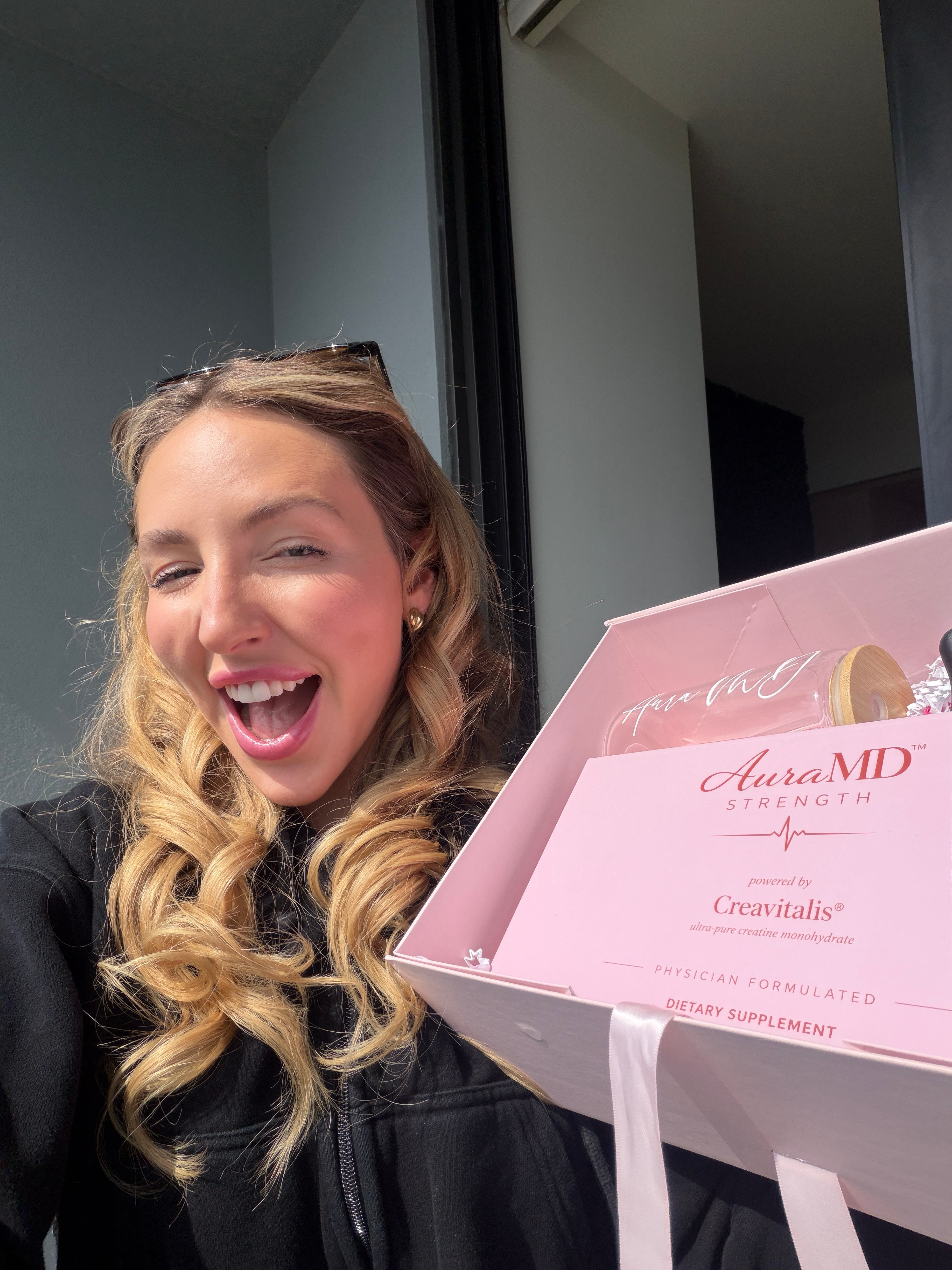
The product. Their first launch is AuraMD Strength: single-serve sticks with 5 g of Creavitalis® creatine monohydrate in each one. It is unflavored, so you can stir it into water, a smoothie, yogurt or oats, and it arrives as a full ritual, pink box and glass tumbler included ($90).
Why I love it. Creatine is one of the most studied supplements out there, and for years it was marketed almost entirely to men at the gym. AuraMD makes it for women who refuse to choose between performance and beauty, with a doctor behind the formula.
They are building their launch list now, and your first shipment is free when you join at auramd.health. This is exactly who we mean by women who build. 🫶
This week in the Club
Two days until our next room. Here is everything coming up.
Wednesday, November 18, 6pm ET, online. Founder Roundtable: Your first hire, and what to look for
Thursday, November 19, 10am ET, Miami. Founder Coffee Hour
Thursday, November 19, 7pm ET, Miami. Founder Dinner
Friday, November 20, 9:30am ET, Miami. Bots & Bosses: AI Training and Cowork Day
Sunday, December 6, 7pm ET, Miami. The closing dinner, our Art Basel week send-off
The poll
You never know where one yes is going to take you.
Close
One yes took me from setting up Zoom calls to backstage at the conference that started my company. I hope this week you say yes to the room you keep thinking about. I’m cheering for you.
Bailey
Know a founder who needs this? Share it with her.
Built for women who build.
Subscribe for free so the next edition lands in your inbox.