
An accountability partner is the closest thing many founders have to a manager. Without a boss to report to, staying on track with personal and professional goals can feel like navigating a solo mission. This article cuts through the noise, separating what one study found from the statistics that get repeated without a source. For women founders without a manager, the question is practical: who will you report to on Friday?
What an accountability partner is
An accountability partner is a peer with whom you agree to check in regularly to report progress on your goals. This relationship is mutual, meaning both parties are equally committed to supporting each other. Unlike a boss or a coach, an accountability partner is someone on a similar road, sharing the same need for honest feedback and encouragement. What makes this partnership effective is the specificity of the goals, the fixed rhythm of check-ins, and the commitment to honest reporting. For a founder, having an accountability partner can be a powerful tool to stay on track and maintain momentum, especially when the stakes are high and the path is uncertain.
What the research really says
The most cited study on accountability partners comes from Gail Matthews, a psychology professor at Dominican University of California. In her research, Matthews recruited 267 participants and followed 149 who completed the study. These participants were divided into five groups, each with different levels of goal-setting and accountability. The group that wrote down their goals, made action commitments, and sent weekly progress reports to a friend performed the best. More than 70 percent of this group reported successful goal achievement, compared to 35 percent of those who kept their goals to themselves.
However, it's important to note that this study was presented at a conference of the Athens Institute for Education and Research and is a conference presentation, not a peer-reviewed paper. The results are based on self-reported success, which can be subjective and may not always align with objective measures. And 149 people who finished is a small sample. Despite these limitations, the study provides valuable insights into the power of structured accountability.
A plausible reading is simple: writing goals down and sharing them with someone else raises the cost of quietly dropping them. Regular check-ins create a sense of responsibility and urgency, making it harder to procrastinate or give up. The mutual nature of the partnership means both people have something at stake. For founders, this can be particularly beneficial, as the stress and isolation of running a business can sometimes lead to a lack of focus or direction.
The 95% statistic, checked
One of the most widely cited statistics about goal achievement is the claim that having a specific accountability appointment gives a 95% chance of completing a goal. This statistic is often attributed to the American Society for Training and Development (ASTD), but no primary source for it has been traced. The lack of a verifiable source calls into question the validity of this claim, and it should be treated with skepticism.
In a 2007 presentation abstract, Gail Matthews, the same researcher behind the Dominican University study, called the often-cited Harvard or Yale study of written goals, the 3 percent story, an urban myth. This further underscores the importance of critically evaluating motivational statistics and their sources. While the 95% figure may be appealing, it lacks the empirical support to be considered a reliable metric.
The lesson here is clear: check the source of any motivational statistic before accepting it as fact. For founders, this means being discerning about the information they rely on to make decisions. The case for accountability partners rests on one modest study, which is enough to try the habit and not enough to promise results.

Partner, group or coach
Choosing the right form of accountability can make a significant difference in achieving your goals. Here’s a breakdown of the options:
Accountability partner: This is a one-on-one relationship with a peer, typically free, and mutual. Both parties share their goals and progress, offering support and feedback. It’s ideal for those who prefer a focused, personal connection and are comfortable with mutual accountability.
Peer advisory group or mastermind: These groups consist of several peers, often facilitated by a rotating host or a paid facilitator. They provide a broader network of support and diverse perspectives; our guide to the mastermind group covers the format. Group settings are beneficial for founders who thrive in a community and need varied input. The structure can be more formal, with regular meetings and structured agendas.
Paid coach: A professional coach offers one-on-one sessions, for a fee, and provides expert guidance and accountability. Coaches are trained to help you identify and overcome obstacles, and they can offer strategies tailored to your specific needs. This option is best for founders who require specialized expertise and are willing to invest in their personal and professional development.
Each option has its strengths and is suited to different needs and preferences. An accountability partner is ideal for those who value a close, mutual relationship, while a peer advisory group, such as the CEO peer groups we compared earlier, can offer a wider range of perspectives and support. A paid coach is best for founders who need expert guidance and are willing to invest in their growth.
How to set up a weekly check-in
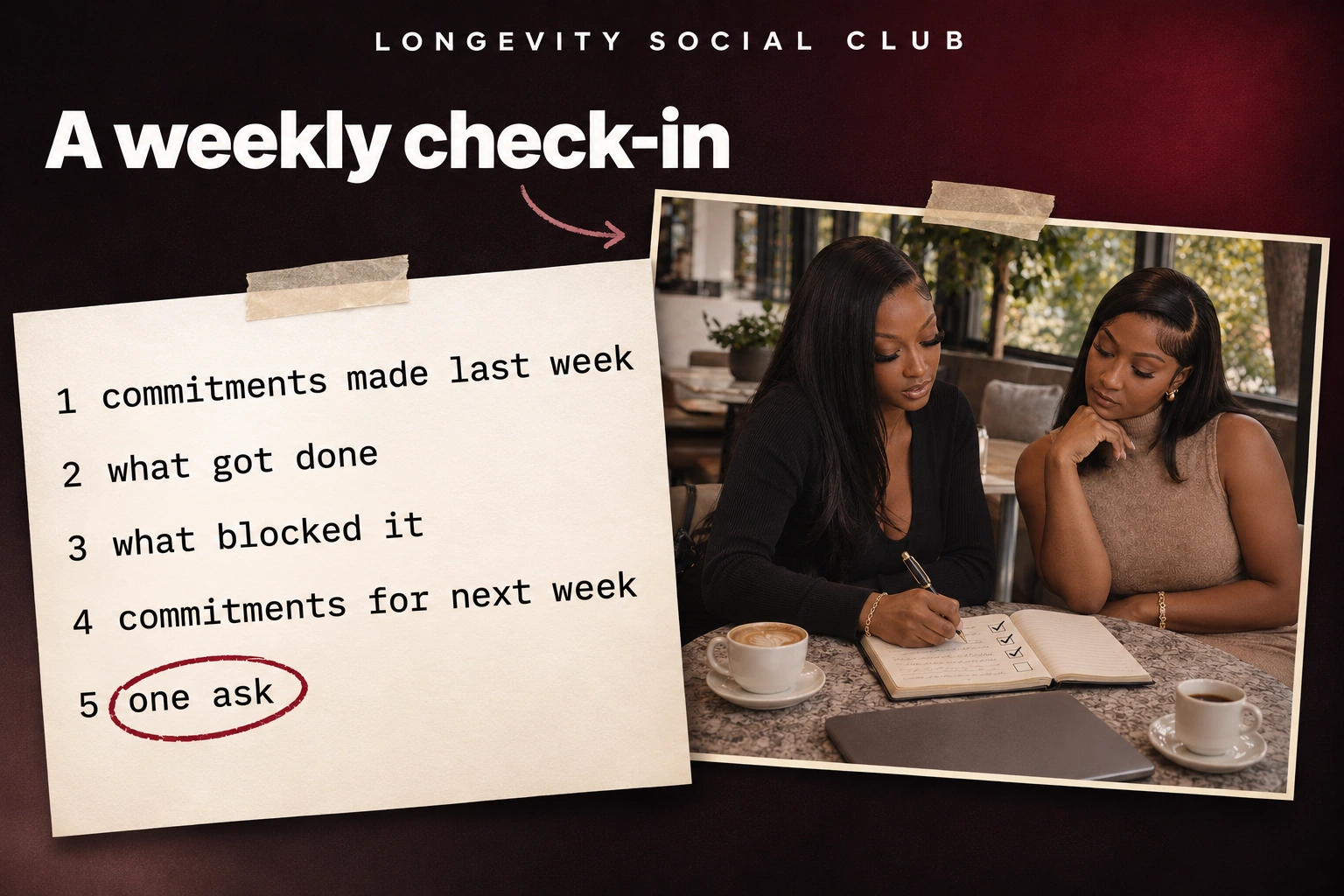
Setting up a consistent and effective weekly check-in is crucial for maintaining accountability. Here’s a practical format to follow:
Choose a day and time: Select a specific day and time each week for your check-in. Consistency is key to building a habit. A 30-minute slot is usually sufficient.
Prepare in advance: Before the check-in, each person should write down their commitments from the previous week, what they accomplished, what blocked them, and their commitments for the next week. This preparation ensures that the session is productive and focused.
Report progress: During the check-in, each person reports on their commitments from the previous week. Be specific about what was achieved and what wasn’t. Discuss any challenges that arose and how they were addressed.
Identify blockers: If something prevented you from meeting your commitments, identify the blocker and discuss potential solutions. This step is crucial for continuous improvement.
Set new commitments: Agree on new commitments for the upcoming week. Be realistic and specific about what you will achieve.
One ask: Each person can make one ask of the other. This could be for advice, resources, or moral support. It reinforces the mutual nature of the partnership.
Be direct: Agree in advance to be direct and honest with each other. Avoid the common pitfall of being too nice, which can undermine the effectiveness of the partnership. Constructive feedback is essential for growth.
Follow the same format every week and the check-in stays short, specific and hard to fudge.
Where founders find one
Finding the right accountability partner, group, or coach matters more than the format you pick. Here are some effective ways to connect with potential partners:
Recurring events: Attend industry meetups, conferences, and networking events. These gatherings are excellent opportunities to meet fellow founders who are at a similar stage in their business.
Cowork days: Participate in coworking sessions, either in person or virtually. Cowork days provide a structured environment for focused work and natural opportunities for building connections.
Hot seats: Some organizations run hot seat sessions where members present a current challenge and get feedback from peers. A disclosure: we run hot seats and cowork days ourselves. This format can be a great way to find a compatible accountability partner.
Workshops and founder groups: Join workshops and founder groups that align with your interests and goals, including small-group workshops where the same faces return. These groups often have a built-in structure for accountability and support.
Former colleagues: Reach out to former colleagues who are now running their own businesses. A shared history can make it easier to establish a strong, mutual accountability relationship.
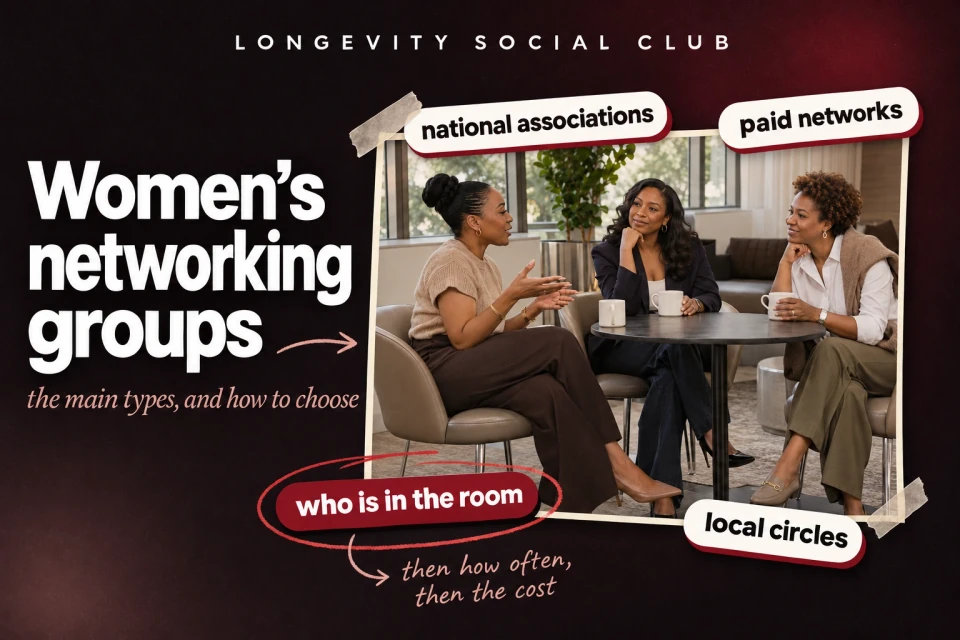
When looking for an accountability partner, it’s important to find someone with a similar rhythm and stakes. A friend who is too lenient may not push you to your full potential, while someone with a vastly different schedule or business stage might not provide the right level of support. Our map of women's networking groups is one place to start the search.
The practical takeaway
An accountability partner is a small, cheap habit with modest evidence behind it. By setting up a structured weekly check-in and finding a compatible partner, you can maintain focus and momentum. Whether you choose a one-on-one partner, join a peer advisory group, or work with a paid coach, what matters is being consistent and direct.
If you would like a room full of founders to find one in, apply to The Longevity Social Club.