

A private members club NYC can seem like a status symbol, but what matters is whether you would use it. Most of what you find online is marketing or press, which tends to gloss over the practical details. This piece sticks to what the clubs publish, giving you the facts to decide if a club suits your needs. Whether you're searching for a private members club NYC or just curious about the costs and who they serve, we aim to provide a clear, evidence-aware guide.
What a private members club in New York gives you
These clubs provide a mix of socializing and places to meet that can be useful for women founders and operators. Whether you're looking for a place to host a business meeting, unwind after a long day, or connect with other people, a private members club in NYC can offer rooms and company. Our general guide to how private members clubs work covers the format.
A private members club in New York is a real decision and not an accessory: it is a recurring cost for a room you must keep using. Founders tend to justify it by the people they might meet; it is worth checking whether the calendar and the commute allow that. The allure of a club is often the promise of serendipitous connections, but the reality is that it requires a consistent time commitment. If your schedule is already packed with meetings, client visits, and travel, the club might end up being a luxury you do not fully utilize. Be honest about how often you can realistically commit to being there and whether that aligns with your goals.
The convenience of having a dedicated space for work and leisure can be particularly appealing for busy entrepreneurs. However, the decision to join is not one to be taken lightly. Membership costs and application processes are important factors to consider.
The rooms: Soho House, CORE, Casa Cipriani
Soho House, CORE, and Casa Cipriani are three private members clubs in New York. Here is what each says for itself.
Soho House
Soho House New York is located at 29-35 Ninth Avenue and lists 44 bedrooms. Its House Rules say the Membership Committee meets quarterly and makes the final decision on new members. The application itself takes around 15 minutes to complete. Membership renewals are not automatic and are reviewed by the Membership Behaviour Committee on an annual basis. We have a closer look at what Soho House membership costs elsewhere in the Journal.
CORE
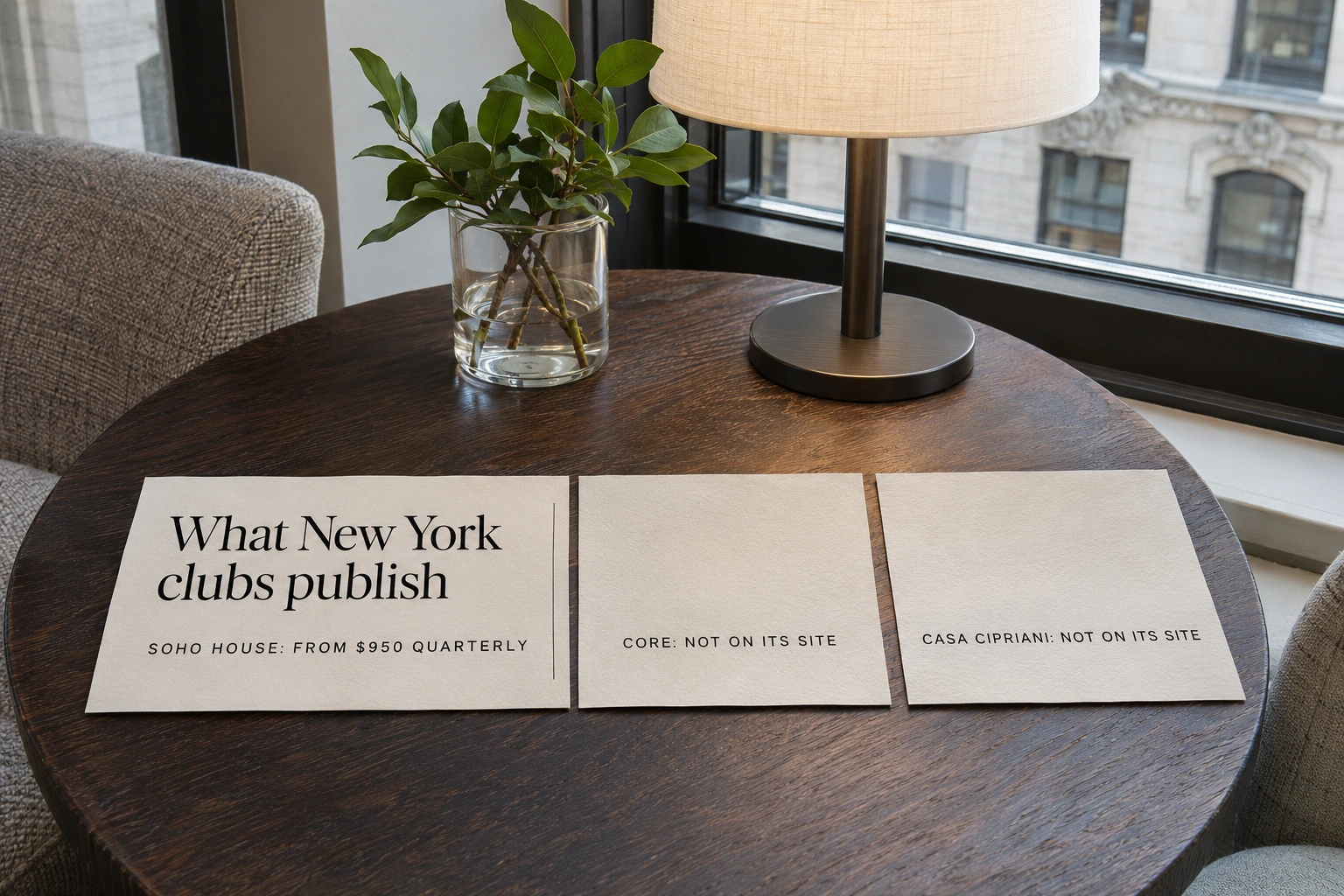
CORE is situated at 711 Fifth Avenue and describes itself as offering "World-class dining, cultural programming, and wellness." That is its own wording. The exact membership fees are not published on the CORE website. For potential members, it may be worth reaching out directly to CORE to inquire about membership costs and the application process.
Casa Cipriani
Casa Cipriani, located in the Battery Maritime building, opened its doors in 2021. The club is a private members club in both New York and Milan. Like CORE, Casa Cipriani does not publish its membership fees on its website.
What it costs, where published
Soho House's own page states that membership starts from $950 quarterly, with a reduced rate of $475 for Under 27 members, as of November 4, 2026. CORE and Casa Cipriani do not publish their fees on their official pages, which means you will need to ask for the current fee in writing, including any joining fee. Soho House's rules reserve the right to charge a House introduction fee upon joining and an annual subscription fee. This lack of transparency can be a red flag, so it's wise to get all financial details in writing before committing.
We stick to published details. On this subject, fee figures from press and aggregator pages conflict, so printing them would give a false precision. Publishing a fee is a choice clubs may or may not make, and we do not read anything into it either way. Ask them and get the answer in writing.
Do the arithmetic on a quarterly fee: a fee from $950 quarterly is paid four times a year whether you go or not; estimate honest visits and divide. Then compare it with what you already spend on rented meeting rooms and coffee shops. That is the math the brochure leaves to you.
Who these clubs suit
A private members club NYC is most useful to someone who is in the city often and needs a consistent space for meetings or work. If you are in town four days a year, you are likely paying for a door rather than a functional benefit. Travel is a valid reason only if you genuinely go to New York frequently. The best private members club NYC is the one you will use, and no list can settle that for you. We have not ranked any clubs because the right choice depends on your specific needs and how you plan to use the space.
Who probably should not join? Someone who travels constantly elsewhere, someone who wants a guaranteed professional network (no club can promise who you will meet), someone who would resent the commute. No shame in any of those. If your work requires frequent travel, the club might not be a practical choice. Similarly, if you are looking for a guaranteed professional network, a club is not a sure bet. Connections are often serendipitous and depend on the people who are there. Lastly, if the commute to the club feels like a chore, you are less likely to use it regularly. It is important to be realistic about your needs and preferences to avoid feeling resentful about a costly membership.
Ultimately, the best private members clubs in NYC are those that align with your specific needs and how often you can realistically use them. If what you really want is a desk, a coworking space for women may answer the question at a lower price.
Founder-focused alternatives
For founders and operators, there are alternatives to traditional private members clubs that do not require a physical building. Peer groups and event-based clubs offer a more flexible and focused approach. The Longevity Social Club, which publishes this Journal, is built around our events rather than a house, so we disclose it and leave the comparison to you. The Community is free, while The Club charges $97 a month or $970 a year, and our membership tiers set out what each includes. As a founder, you should compare these options by the people they attract and the frequency of events.
Questions to ask before you apply
Read the application process itself as information: committee decisions, quarterly meetings, renewal review. A process like that tells you a club has rules about who stays, which some will like and others will not. Ask what happens if a committee says no. The application process can reveal a lot about a club's values and culture. For instance, Soho House has a Membership Committee that meets quarterly to make final decisions on applications, and renewals are reviewed annually. However, it also means that membership is not guaranteed, and there is a possibility of being turned down or not renewed. It is worth asking what the criteria are and what happens if your application is not accepted.
Before applying to any private members club in NYC, it's worth asking the right questions. Here are some to consider:
- Membership cost and fees: what are the membership fees, and are there any additional costs?
- Application process: how long does it take? Soho House states that the application takes around 15 minutes to complete, but the entire process, including committee reviews, can take longer.
- Committee reviews: what is the criteria for acceptance? Soho House's Membership Committee meets quarterly to make the final decision.
- Renewal policies: are membership renewals automatic? At Soho House, they are not.
- Amenities and services: what is included in the membership?
- Community and events: are there regular events you would really go to?
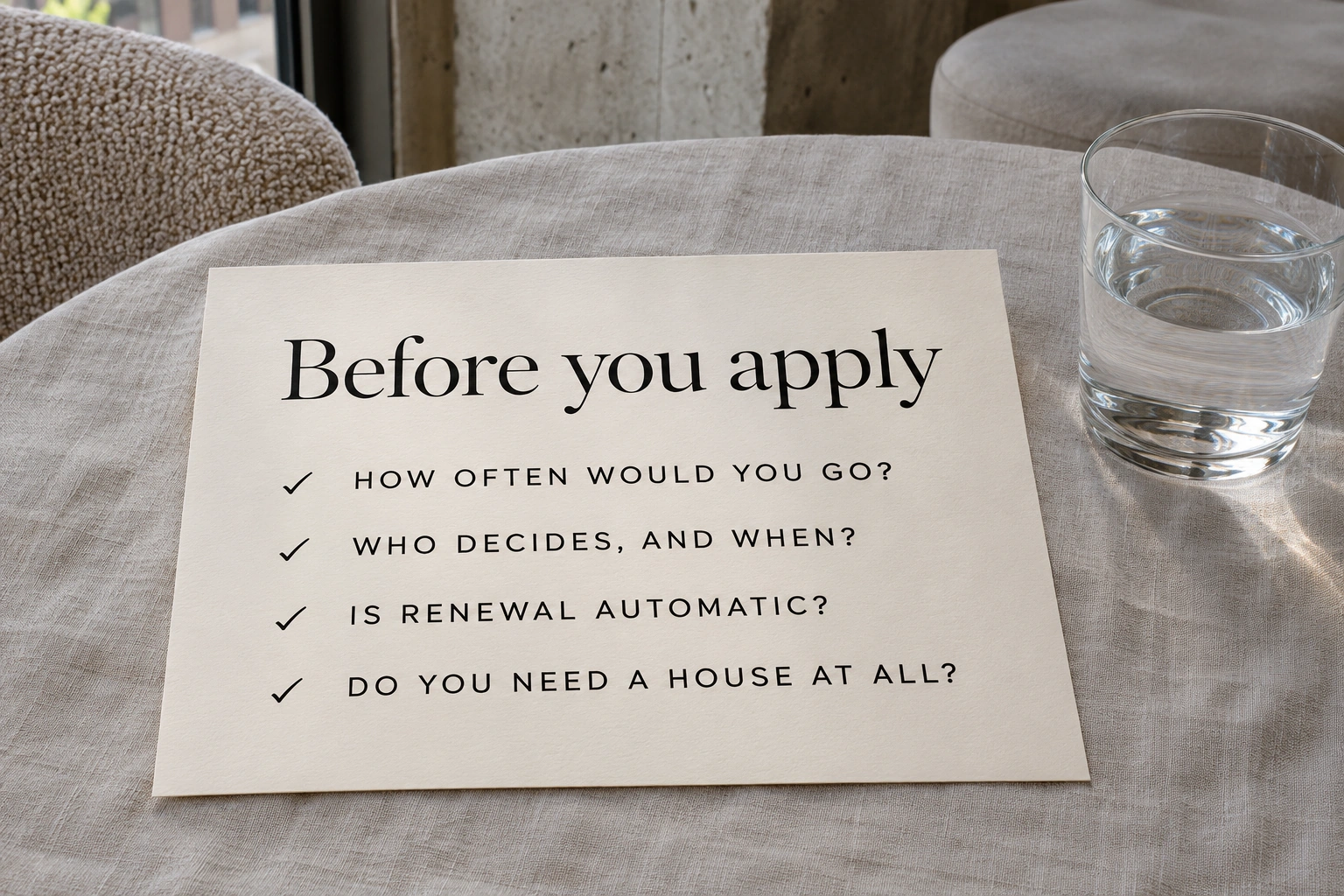
Asking these questions will help you make an informed decision.
The practical takeaway
When considering a private members club NYC, align the club's offerings with your specific needs and how often you can realistically use them. Always ask the right questions before applying.
If you are comparing formats and ours fits, apply to the club.